

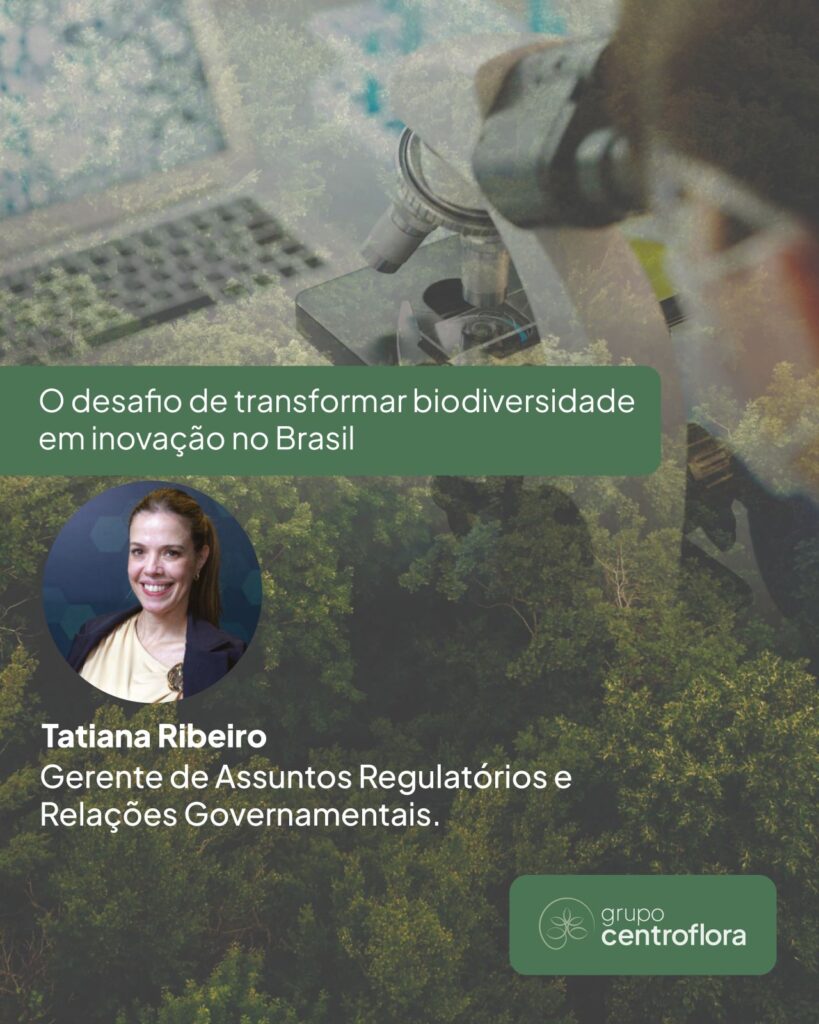
Between advances and obstacles: the challenge of transforming biodiversity into innovation in Brazil.
The new regulatory framework for herbal medicines, published by the National Health Surveillance Agency (Anvisa) in December 2025, was the latest in a series of institutional advances that pave the way for Brazil to confront a historical paradox. Although it possesses one of the greatest biodiversities on the planet and has accumulated decades of scientific research, the country still occupies a marginal position in the market for medicines based on plant-based active pharmaceutical ingredients. In this context, other recent initiatives reinforce the attempt to reorganize the sector, such as the reactivation of the National Committee on Medicinal Plants and Herbal Medicines (CNPMF) and the creation of a Parliamentary Front dedicated to the topic.
With this in mind, we are pleased to share the participation of Tatiana Ribeiro, our Regulatory Affairs and Government Relations Manager, in the new edition of FACTO Magazine (No. 80), a strategic publication of ABIFINA.
In a scenario where Brazil holds the world's greatest biodiversity, Tatiana offers fundamental reflections on the challenges and opportunities to transform this potential into real innovation and scale for the national market. As Tatiana highlights: "It is essential that industrial, regulatory, and health policies act in an integrated manner, promoting predictability, stimulating local production, and strengthening the national supply chain."
At Centroflora, we believe that strengthening our pharmaceutical industry necessarily involves integrating science, valuing our biodiversity, and high-value-added sustainable development. Qualified debate is the first step towards the development of the Brazilian bioeconomy. FACTO Magazine is an essential space for this exchange, and Centroflora is proud to be an active part of these discussions.
Check out the full interview and the special edition of FACTO Magazine.